---
title: "Turbocharge Team Development: Unlocking Growth with AI Tools"
description: "AI-powered everyday upskilling for SMEs: replace annual workshops with micro-learning that boosts retention, agility, and measurable team performance."
image: https://www.leanlearningcollective.com/hubfs/Blog%20Image%20-%20Prodction%20Working%20using%20Tracking%20Software%20on%20Tablet.webp
---
[Skip to main content](https://www.leanlearningcollective.com/blog/turbocharge-team-development-unlocking-growth-with-ai-tools#main-content)
[   ](https://www.leanlearningcollective.com)
- [Who we help](https://www.leanlearningcollective.com/who-we-help)
- Show submenu for Solutions Solutions
- [Custom Integrations](https://www.leanlearningcollective.com/custom-workflow-integrations)
- [Case Studies](https://www.leanlearningcollective.com/case-studies)
- [About Us](https://www.leanlearningcollective.com/about-us)
- Show submenu for Resources Resources
- [Blog](https://www.leanlearningcollective.com/blog)
- [Instant AI Opportunity Audit](https://www.leanlearningcollective.com/ai-audit)
- [Business Growth Framework](https://www.leanlearningcollective.com/transform-your-business-framework-for-success)
- [Join the AI Community](https://www.leanlearningcollective.com/community)
Open main navigation
Close main navigation
- [Who we help](https://www.leanlearningcollective.com/who-we-help)
- Show submenu for Solutions Solutions
- Solutions
- [Custom Integrations](https://www.leanlearningcollective.com/custom-workflow-integrations)
- [Case Studies](https://www.leanlearningcollective.com/case-studies)
- [About Us](https://www.leanlearningcollective.com/about-us)
- Show submenu for Resources Resources
- Resources
- [Blog](https://www.leanlearningcollective.com/blog)
- [Instant AI Opportunity Audit](https://www.leanlearningcollective.com/ai-audit)
- [Business Growth Framework](https://www.leanlearningcollective.com/transform-your-business-framework-for-success)
- [Join the AI Community](https://www.leanlearningcollective.com/community)
- [Instant AI Audit](https://www.leanlearningcollective.com/ai-audit)
[Contact Us](https://www.leanlearningcollective.com/contact-us)
[Instant AI Audit](https://www.leanlearningcollective.com/ai-audit)
[Contact Us](https://www.leanlearningcollective.com/contact-us)
[Blog](https://www.leanlearningcollective.com/blog)
Tags
- [SmartStop](https://www.leanlearningcollective.com/blog/tag/smartstop)
- [SmartOTIF](https://www.leanlearningcollective.com/blog/tag/smartotif)
- [AI](https://www.leanlearningcollective.com/blog/tag/ai)
- [Productivity](https://www.leanlearningcollective.com/blog/tag/productivity)
- [leana](https://www.leanlearningcollective.com/blog/tag/leana)
- [FAQs](https://www.leanlearningcollective.com/blog/tag/faqs)
- [SME](https://www.leanlearningcollective.com/blog/tag/sme)
- [B2B](https://www.leanlearningcollective.com/blog/tag/b2b)
- [Coaching](https://www.leanlearningcollective.com/blog/tag/coaching)
- [Krones Labeller](https://www.leanlearningcollective.com/blog/tag/krones-labeller)
- [SmartStop](https://www.leanlearningcollective.com/blog/tag/smartstop)
- [SmartOTIF](https://www.leanlearningcollective.com/blog/tag/smartotif)
- [AI](https://www.leanlearningcollective.com/blog/tag/ai)
- [Productivity](https://www.leanlearningcollective.com/blog/tag/productivity)
- [leana](https://www.leanlearningcollective.com/blog/tag/leana)
- [FAQs](https://www.leanlearningcollective.com/blog/tag/faqs)
- [SME](https://www.leanlearningcollective.com/blog/tag/sme)
- [B2B](https://www.leanlearningcollective.com/blog/tag/b2b)
- [Coaching](https://www.leanlearningcollective.com/blog/tag/coaching)
- [Krones Labeller](https://www.leanlearningcollective.com/blog/tag/krones-labeller)
# Turbocharge Team Development: Unlocking Growth with AI Tools

by [Graeme Hogg](https://www.leanlearningcollective.com/blog/author/graeme-hogg)
Jan 5, 2026, 2:58:13 PM
Picture this: You invest thousands in an annual training workshop. Your team spends a day in a hotel conference room, fueled by stale coffee and high hopes. They leave inspired, but within a week, the binders are shelved, the concepts are forgotten, and old habits return. For most Small to Medium Enterprises (SMEs), this "event-based" training model is a broken investment.
The challenge is real: SMEs need continuous improvement to survive, yet managers lack the bandwidth to act as daily coaches. When production lines are running and orders are piling up, stopping for a two-hour seminar feels impossible. The impact is significant, stagnant skill sets lead to increased downtime, higher error rates, and disengaged employees who feel their career growth has stalled.

There is a better way. By leveraging AI tools for everyday upskilling, you can transform training from a yearly disruption into a daily ritual. AI-powered systems can break complex skills into habit-forming micro-lessons, track real-time participation, and spotlight capability gaps before they become critical failures. This approach turns every workday into a development opportunity.
## In this article, you will learn:
Why traditional training fails and how AI fixes the retention gap.
Which AI tools deliver the highest ROI for team development.
How to implement a micro-learning culture without disrupting operations.
Real-world examples of SMEs saving time and money through automated upskilling.
### What Is AI-Powered Upskilling and Why Do SMEs Need It Now?
AI-powered upskilling is the strategic use of artificial intelligence to analyze individual employee performance, identify knowledge gaps, and deliver personalized, bite-sized training content directly within the flow of work. Unlike static Learning Management Systems (LMS) that act as content repositories, AI-driven platforms function as active coaches, pushing relevant content to the right person at the right time.
### The Shift from Event-Based to Flow-of-Work Learning
The traditional model of "just-in-case" training, teaching everyone everything once a year, is inefficient. Modern AI tools facilitate "just-in-time" learning. This method aligns with the concept of "learning in the flow of work," a term popularized by industry analyst Josh Bersin. It means employees access answers and training modules exactly when they need to perform a task, rather than weeks before or after.
For an SME, this is crucial. According to the [\*\*2023 Work Trend Index\*\*](https://www.microsoft.com/en-us/worklab/s/2LTgSH87iRSRZTGdTvfXxr/) by Microsoft and LinkedIn, 71% of leaders in the UK and globally say they would rather hire a less experienced candidate with AI aptitude than a more experienced candidate without it. This underscores a massive shift: adaptability is now more valuable than tenured knowledge. AI tools for everyday upskilling act as the bridge, allowing your current workforce to acquire that adaptability without leaving the factory floor or the office desk.
### The Cost of Stagnation vs. The ROI of Daily Growth
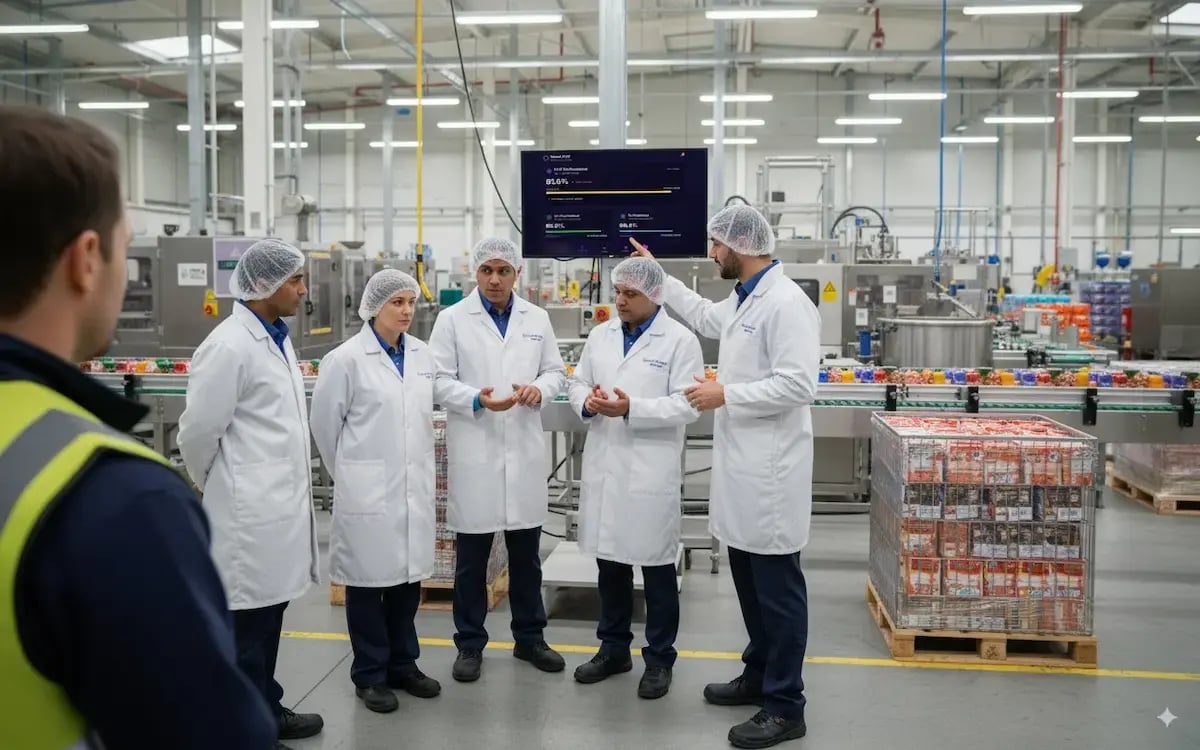
Stagnation is expensive. When employees stop learning, innovation halts, and efficiency plateaus. In manufacturing contexts, this manifests as slower changeovers, repeated machinery faults, and reliance on a single "hero" employee to fix complex issues.
Conversely, the ROI of daily growth is measurable. When a junior technician uses an AI-assisted tool to troubleshoot a machine in 15 minutes instead of waiting two hours for a senior engineer, that is direct savings. When a sales rep uses AI role-play software to perfect their pitch during a 10-minute commute, conversion rates improve.
### Key benefits of AI-driven continuous learning:
Retention of Talent: Employees stay where they grow. Providing modern tools signals investment in their future.
Agility: Teams can pivot to new processes or software updates in days, not months.
Knowledge Democratization: AI captures the expertise of senior staff and makes it accessible to new hires instantly.
Reduced Training Costs: Eliminate travel, venue hire, and lost productivity associated with off-site training days.
Data-Driven Insights: Managers get dashboards showing exactly who knows what, replacing guesswork with data.
### Recent Trends in the Antipodes
The urgency is particularly felt in the APAC region. The "Tech Council of Australia" recently highlighted that Generative AI could contribute up to $115 billion to the Australian economy by 2030, but this requires a massive, rapid upskilling effort. For SMEs in Australia and New Zealand, waiting for government programs isn't an option; they must adopt internal AI tools to keep pace with these economic shifts.
### How Does AI Transform Training into Daily Habits?
AI transforms training into daily habits by utilizing algorithms to personalize content delivery, ensuring lessons are short, relevant, and timely. By leveraging behavioral science principles like spaced repetition and gamification, AI tools make learning addictive rather than a chore.
### Personalized Learning Pathways
One size rarely fits all in team development. A 20-year veteran of your production line does not need the same safety induction as a new apprentice. AI solves this through adaptive learning paths. The software assesses a user's baseline knowledge through quick quizzes or performance data and then curates a specific curriculum.
For example, if an employee consistently struggles with a specific step in the quality control process (logged via your ERP or digital checklist), the AI learning platform can automatically assign a 3-minute refresher video on that exact topic to be watched the next morning. This targeted intervention prevents errors before they multiply.
### Micro-Learning and Spaced Repetition
Human memory is fallible. We forget approximately 50% of new information within an hour if we don't use it. AI tools combat the "forgetting curve" using spaced repetition.
[](https://www.leanlearningcollective.com/hs/cta/wi/redirect?encryptedPayload=AVxigLKa1HA6u2NGGUnKiuDoAjiPw%2FrEPbW%2BV0Ma8WFs9xjbrde0KCfpzZRwBz%2Bmj%2FHwQnbxAEgiY9KOVPtzdW4Qe8JHZk4ZiboIu6atCuYMNbtXnvEXweSJAC%2BhVaCOKkT5Gv69D6cFXiDQOfZirz8pa78j%2Bdd2ZjS%2FdI3YM5ktsNnXQTdDMNIsC8dfE%2B435keUozvOp63L&webInteractiveContentId=300102531288&portalId=146557415)
## How it works:
1. **Initial Exposure:** The employee learns a concept (e.g., a new safety protocol).
2. **Immediate Reinforcement:** A quiz is administered 24 hours later.
3. **Gap Analysis:** If they get a question wrong, the system re-serves the content in a different format (video vs. text).
4. **Long-term Retention:** The system asks a related question 3 days later, then 1 week later, cementing the knowledge.
This takes less than 5 minutes a day but ensures high retention. Platforms like ChatGPT excel at this, delivering "bite-sized" content that feels more like checking social media than studying a textbook.
### Gamification and Engagement
AI tools often incorporate gamification, leaderboards, badges, and streaks to drive engagement. While it may sound trivial, the psychology of maintaining a "learning streak" is powerful.
#### Elements of successful gamification:
Daily Streaks: Encouraging consecutive days of login.
Peer Challenges: Friendly competition on product knowledge quizzes.
Instant Feedback: AI provides immediate corrections, which is more effective than waiting for a graded test.
Rewards Store: Points earned can be exchanged for real-world perks (e.g., a coffee voucher or early finish).
Progress Bars: Visualizing skill acquisition motivates completion.
### Which Tools Are Essential to Turbocharge Team Productivity?
Selecting the right technology is critical. The market is flooded with "AI-enabled" software, but for an SME, the focus must be on ease of use, integration, and tangible outcomes. Here are the specific tools that offer the best value for everyday upskilling.
#### Generative AI for Content Creation
Business Owners often cite "lack of time to create content" as a barrier. Generative AI removes this hurdle.
[LLC Content Accelerator:](https://docs.google.com/presentation/d/1pMDtlQQ_XPsX8Niuk1PArRk1dq-nNvXNm9Y9rlaDhfA/edit?slide=id.g39feeceef09_0_275#slide=id.g39feeceef09_0_275)LLC Content Accelerator is an AI-powered content creation agent built to help marketing teams produce high-quality, SEO-ready blog content and repurpose it into social posts, without the usual time, cost, and repetition of traditional workflows.
Instead of relying on large writing and social teams, it streamlines the end-to-end process from topic/keyword input through to draft creation, QC, optimisation (including both SEO and Answer Engine Optimisation), and publishing support, so one person can produce a full batch of blogs and multi-channel posts in days, not weeks.
A built-in scoring and quality framework helps keep output consistent (word count, structure, depth, examples, actionability, citations, and more), while the model remains “Human + AI”: the agent handles the repetitive 80%, and your team focuses on judgment, creativity, and final approval.

## How to Build a Culture of Continuous Improvement?
Tools alone will not solve the problem. To truly turbocharge team development, you must integrate these tools into the cultural fabric of your company. It requires a shift from "training is something I have to do" to "learning is part of how I work."
### Integrating Learning into Daily Workflows
The biggest friction point is the login screen. If an employee has to log out of their email, log into an LMS, and search for a course, they won't do it. Integration is key.
#### Implementation steps:
1. **Embed in Communication Tools:** Use integrations that deliver micro-lessons directly via Microsoft Teams, Slack, or WhatsApp. A daily 9:00 AM "Question of the Day" in the team chat drives higher engagement than a monthly newsletter.
2. **Mobile Accessibility:** Ensure the platform is mobile-friendly. For manufacturing staff without desks, the ability to do a 3-minute lesson on a tablet or phone during downtime is essential.
3. **Schedule "Learning Sprints:** Instead of open-ended goals, run 2-week sprints focused on a specific skill (e.g., "Cybersecurity Awareness Week").
4. **Leadership Modeling:** Leaders must share their learning scores. If the CEO shares their quiz results (even the bad ones), it normalizes the process.
5. **Link to KPIs:** Tie learning progress to performance reviews. Not just "did you do the course," but "did you apply the skill?"
### Tracking Progress Without Micro-Management
AI provides granular data, but using it to police employees can backfire. If every dashboard is treated like a surveillance tool, people will game the system, hide mistakes, or resist the very tools meant to help them. Instead, position AI insights as a coaching aid: use patterns in the data to spot where extra support, clearer instructions, or better tools are needed.
Share results transparently, invite employees into the conversation, and focus on removing obstacles rather than assigning blame. When people trust that data is there to help them succeed, not catch them out, they are far more likely to engage honestly, learn faster, and adopt new behaviours that drive long-term performance.
#### What to track:
Completion Rates: Are people engaging?
Confidence Scores: Many AI tools ask, "How confident do you feel?" alongside the quiz. High competence but low confidence indicates a need for mentorship.
Skill Gaps: Look for patterns. If 80% of the team fails the "Safety Lockout" module, the problem isn't the team; it's the process or the training material.
### Which Skills Yield the Highest ROI for Manufacturing SMEs?
For readers in the manufacturing and industrial sectors (common users of [SmartStop](https://www.leanlearningcollective.com/smartstop-productivity) and[SmartOTIF](https://www.leanlearningcollective.com/smartotif-delivery) solutions), not all skills are created equal. AI tools for everyday upskilling should be directed toward high-impact areas.
### Technical Troubleshooting and Maintenance
The "Silver Tsunami" (retirement of older, skilled workers) is a major threat. Capturing their knowledge before they leave is critical.
Strategy: Use AI Video tools to record senior technicians performing complex changeovers. Use AI to transcribe and tag these videos. Create a searchable library for junior staff.
ROI: Reducing machine downtime by even 1% can save tens of thousands of pounds annually. Quick access to troubleshooting guides reduces Mean Time To Repair (MTTR).
### Data Literacy and Digital Fluency
As factories become "smart," operators need to understand data. They don't need to be data scientists, but they need to interpret dashboard alerts.
Curriculum: Short lessons on how to read OEE (Overall Equipment Effectiveness) charts, how to input data correctly into tablets, and why accurate data entry matters.
Impact: High-quality data inputs lead to better decision-making from management.
### Soft Skills and Leadership Communication
Promoting a floor operator to a shift supervisor is a common transition, but often done without leadership training. This sets them up for failure.
Approach: Use AI role-play simulators to practice "difficult conversations" or conflict resolution.
Outcome: Better shift management, reduced friction between teams, and lower turnover rates.
## Real-World Success: Implementing AI Upskilling
Let’s look at a concrete example of how this methodology transforms an SME.
#### The Scenario: "Precision Parts Ltd."
Context: A mid-sized component manufacturer in the UK with 150 staff.
Challenge: New machine operators took 8 weeks to become fully productive. The safety incident rate was creeping up due to inexperienced staff. Senior engineers were spending 15 hours a week retraining juniors, causing project delays.
#### The Solution: AI-Powered Micro-Learning
The company implemented a mobile-based AI learning platform (like EdApp) and a generative AI video tool.
1. **Digitized SOPs:** They took their dusty Standard Operating Procedure (SOP) binders and converted them into 3-minute interactive lessons.
2. **QR Codes on Machines:** They placed QR codes on every piece of machinery. Scanning the code launched a specific "How-to" video and a safety checklist on the operator's phone.
3. **Daily Safety Burst:** Every morning shift started with a 2-minute safety quiz on their phones.
4. **AI Translation:** Because 30% of their workforce spoke English as a second language, they used AI to instantly translate all training into Polish and Spanish.
### The Results
Within six months, Precision Parts Ltd. saw measurable changes:
Onboarding Time: Reduced from 8 weeks to 4 weeks (50% reduction).
Safety Incidents: Dropped by 40% due to daily reinforcement.
Senior Productivity: Engineers reclaimed 10 hours per week, allowing them to focus on optimization projects.
Cost Savings: Estimated £45,000 saved in lost productivity and training overheads in year one.
## The Future of Workforce Development
The landscape of team development is evolving rapidly. As we look toward 2026 and beyond, the integration of AI will become even more seamless, shifting from a set of standalone tools into an invisible layer that underpins everyday work. Instead of thinking, "I'm using an AI app now," employees will simply ask questions, receive guidance, and complete tasks with AI quietly operating in the background.
For SMEs, this means development experiences that are not only personalized, but also context, aware, training that adapts in real time to production schedules, live performance data, and individual learning preferences. AI will automatically surface the right micro-lesson when a new process goes live, suggest refresher content before a common error is likely to occur, and update learning paths as your technology stack and business priorities change.
As regulations, customer expectations, and technologies evolve, AI-driven upskilling will increasingly function as a continuous feedback loop: capturing what’s happening on the shop floor or in the sales pipeline, translating those signals into learning needs, and delivering targeted interventions without managers having to orchestrate every step. In short, AI will move from supporting team development to orchestrating it, quietly ensuring that your people have the right skills at the right moment to keep your business competitive.
### Predictive Skill Gap Analysis
Future AI tools won't just track what you have learned; they will predict what you need to learn based on business goals. If a company plans to install a new Krones Labeller in six months, the AI system will automatically begin "pre-skilling" the maintenance team on labeling technology principles weeks in advance, ensuring they are ready on day one.
### Augmented Reality (AR) and AI Coaching
We are moving toward "performance support" rather than just training. Imagine smart glasses that overlay instructions on a machine as the worker looks at it. AI will monitor the worker's hands and provide real-time audio corrections: "Turn the valve to the left, not the right." This merges training and execution into a single event.
## Conclusion
The era of the annual training seminar is ending. In its place is a dynamic, continuous, and highly personalized approach driven by AI tools for everyday upskilling. For SMEs, this isn't just a "nice to have", it is a survival mechanism in a tight labor market where agility is the currency of success. By breaking learning down into manageable, daily habits, you empower your team to grow without grinding operations to a halt.
## Key takeaways:
Shift to Micro-Learning: Replace hour-long lectures with 5-minute daily bursts. This aligns with human memory retention and operational reality.
Personalization is Key: Use AI algorithms to serve different content to different employees based on their actual performance gaps, not a generic syllabus.
Invest in the Right Stack: Tools like EdApp for mobile learning, Otter.ai for knowledge capture, and Synthesia for content creation offer high ROI for SMEs.
Measure Application, Not Just Attendance: Move beyond "who showed up" to "who is improving." Use data to identify future leaders and struggling team members early.
Integrate to Win: Make learning part of the workflow (Teams, Slack, QR codes) so it becomes as natural as checking email.
[](https://www.leanlearningcollective.com/hs/cta/wi/redirect?encryptedPayload=AVxigLKoxZTqB0DK5iQNa9akz51iqtrXEvHbKtV%2FvePiCi0rw7bE3NnnzMRhIPKcDxindDmOdMi4NzYxI4OJrJRtRz4rI2WYha0%2BI7EP3LGtofK%2BJGGaFklrvUVhhthmiV93uo%2Fuc2xUejdoxz5WC2xhpvOgtIEqJS%2Bw9lAWwzUHqXQqSifqtR6ZHcmVwPf0XhuJPYSx7WPr&webInteractiveContentId=300102530276&portalId=146557415)
Your team is your most valuable asset. Don't let their skills depreciate. Start your AI upskilling journey today with the [Lean Learning Collective,](https://www.leanlearningcollective.com/) and watch your business capability compound day after day.

**[Graeme Hogg](https://www.leanlearningcollective.com/blog/author/graeme-hogg)**
Jan 5, 2026, 2:58:13 PM
An Operations Consultant and Coach, Graeme lives and breathes operational excellence. Unlike typical consultants, he is known for his "boots on the ground" approach, engaging directly with teams and situations to drive meaningful change.
### Ready to Transform Your Operations?
Have a question, project idea, or just want to say hello? Reach out to our team. We’d love to hear from you.

- [Case Studies](https://www.leanlearningcollective.com/case-studies)
- [About Us](https://www.leanlearningcollective.com/about-us)
- [Who We Help](https://www.leanlearningcollective.com/who-we-help)
- [Blog](https://www.leanlearningcollective.com/blog)
- [Leana AI-Detective](https://www.leanlearningcollective.com/leana-ai-detective)
- [Smart-Stop Productivity](https://www.leanlearningcollective.com/smartstop-productivity)
- [Smart-OTIF Delivery](https://www.leanlearningcollective.com/smartotif-delivery)
- [Custom Integrations](https://www.leanlearningcollective.com/custom-workflow-integrations)
- [Book a Demo](https://www.leanlearningcollective.com/book-a-demo)
- [Instant AI Opportunity Audit](https://www.leanlearningcollective.com/ai-audit)
© 2026 Lean Learning Collective Ltd. All Rights Reserved. [Privacy Policy](https://www.leanlearningcollective.com/privacy-policy) | [Terms & Conditions](https://www.leanlearningcollective.com/terms-conditions)
-
-
-
```json
{
"@context" : "https://schema.org",
"@type" : "BlogPosting",
"author" : {
"@type" : "Person",
"name" : "Graeme Hogg",
"url" : "https://www.leanlearningcollective.com/blog/author/graeme-hogg"
},
"dateModified" : "2026-01-06T15:49:34.166Z",
"datePublished" : "2026-01-05T14:58:13.000Z",
"headline" : "Turbocharge Team Development: Unlocking Growth with AI Tools",
"image" : [ "https://www.leanlearningcollective.com/hubfs/Blog%20Image%20-%20Prodction%20Working%20using%20Tracking%20Software%20on%20Tablet.webp" ],
"mainEntityOfPage" : {
"@id" : "https://www.leanlearningcollective.com/blog/turbocharge-team-development-unlocking-growth-with-ai-tools",
"@type" : "WebPage"
},
"publisher" : {
"@type" : "Organization",
"logo" : {
"@type" : "ImageObject",
"url" : "https://www.leanlearningcollective.com/hubfs/LLC-Logo-main-line-white.png"
},
"name" : "Lean Learning Collective"
}
}
```