---
title: AI-Powered Shift Reports for Smarter Production Insights
description: Transform manual shift notes into AI-powered insights. Reduce downtime, improve quality, with automated reporting, real-time alerts, and role-based dashboards.
image: https://www.leanlearningcollective.com/hubfs/Blog%20Image:%20Leana%20Header%20Page.webp
---
[Skip to main content](https://www.leanlearningcollective.com/blog/ai-powered-shift-reports-for-smarter-production-insights#main-content)
[   ](https://www.leanlearningcollective.com)
- [Who we help](https://www.leanlearningcollective.com/who-we-help)
- Show submenu for Solutions Solutions
- [Custom Integrations](https://www.leanlearningcollective.com/custom-workflow-integrations)
- [Case Studies](https://www.leanlearningcollective.com/case-studies)
- [About Us](https://www.leanlearningcollective.com/about-us)
- Show submenu for Resources Resources
- [Blog](https://www.leanlearningcollective.com/blog)
- [Instant AI Opportunity Audit](https://www.leanlearningcollective.com/ai-audit)
- [Business Growth Framework](https://www.leanlearningcollective.com/transform-your-business-framework-for-success)
- [Join the AI Community](https://www.leanlearningcollective.com/community)
Open main navigation
Close main navigation
- [Who we help](https://www.leanlearningcollective.com/who-we-help)
- Show submenu for Solutions Solutions
- Solutions
- [Custom Integrations](https://www.leanlearningcollective.com/custom-workflow-integrations)
- [Case Studies](https://www.leanlearningcollective.com/case-studies)
- [About Us](https://www.leanlearningcollective.com/about-us)
- Show submenu for Resources Resources
- Resources
- [Blog](https://www.leanlearningcollective.com/blog)
- [Instant AI Opportunity Audit](https://www.leanlearningcollective.com/ai-audit)
- [Business Growth Framework](https://www.leanlearningcollective.com/transform-your-business-framework-for-success)
- [Join the AI Community](https://www.leanlearningcollective.com/community)
- [Instant AI Audit](https://www.leanlearningcollective.com/ai-audit)
[Contact Us](https://www.leanlearningcollective.com/contact-us)
[Instant AI Audit](https://www.leanlearningcollective.com/ai-audit)
[Contact Us](https://www.leanlearningcollective.com/contact-us)
[Blog](https://www.leanlearningcollective.com/blog)
Tags
- [SmartStop](https://www.leanlearningcollective.com/blog/tag/smartstop)
- [SmartOTIF](https://www.leanlearningcollective.com/blog/tag/smartotif)
- [AI](https://www.leanlearningcollective.com/blog/tag/ai)
- [Productivity](https://www.leanlearningcollective.com/blog/tag/productivity)
- [leana](https://www.leanlearningcollective.com/blog/tag/leana)
- [FAQs](https://www.leanlearningcollective.com/blog/tag/faqs)
- [SME](https://www.leanlearningcollective.com/blog/tag/sme)
- [B2B](https://www.leanlearningcollective.com/blog/tag/b2b)
- [Coaching](https://www.leanlearningcollective.com/blog/tag/coaching)
- [Krones Labeller](https://www.leanlearningcollective.com/blog/tag/krones-labeller)
- [SmartStop](https://www.leanlearningcollective.com/blog/tag/smartstop)
- [SmartOTIF](https://www.leanlearningcollective.com/blog/tag/smartotif)
- [AI](https://www.leanlearningcollective.com/blog/tag/ai)
- [Productivity](https://www.leanlearningcollective.com/blog/tag/productivity)
- [leana](https://www.leanlearningcollective.com/blog/tag/leana)
- [FAQs](https://www.leanlearningcollective.com/blog/tag/faqs)
- [SME](https://www.leanlearningcollective.com/blog/tag/sme)
- [B2B](https://www.leanlearningcollective.com/blog/tag/b2b)
- [Coaching](https://www.leanlearningcollective.com/blog/tag/coaching)
- [Krones Labeller](https://www.leanlearningcollective.com/blog/tag/krones-labeller)
# AI-Powered Shift Reports for Smarter Production Insights

by [Graeme Hogg](https://www.leanlearningcollective.com/blog/author/graeme-hogg)
Oct 30, 2025, 1:45:39 PM
### **Turn scattered shift notes into a single source of truth that accelerates decisions, reduces downtime, and fuels continuous improvement.**
Picture this: every shift in your plant generates a stream of operational intelligence, equipment anomalies, quality checks, safety observations, staffing constraints, and handover notes. Yet much of that value is lost inside **handwritten logbooks**, **disparate spreadsheets**, or **informal verbal updates**. The result? A widening gap between **shop-floor reality** and **strategic decision-making**, slower **problem resolution**, and a drag on **OEE**, **yield**, and **on‑time delivery**.
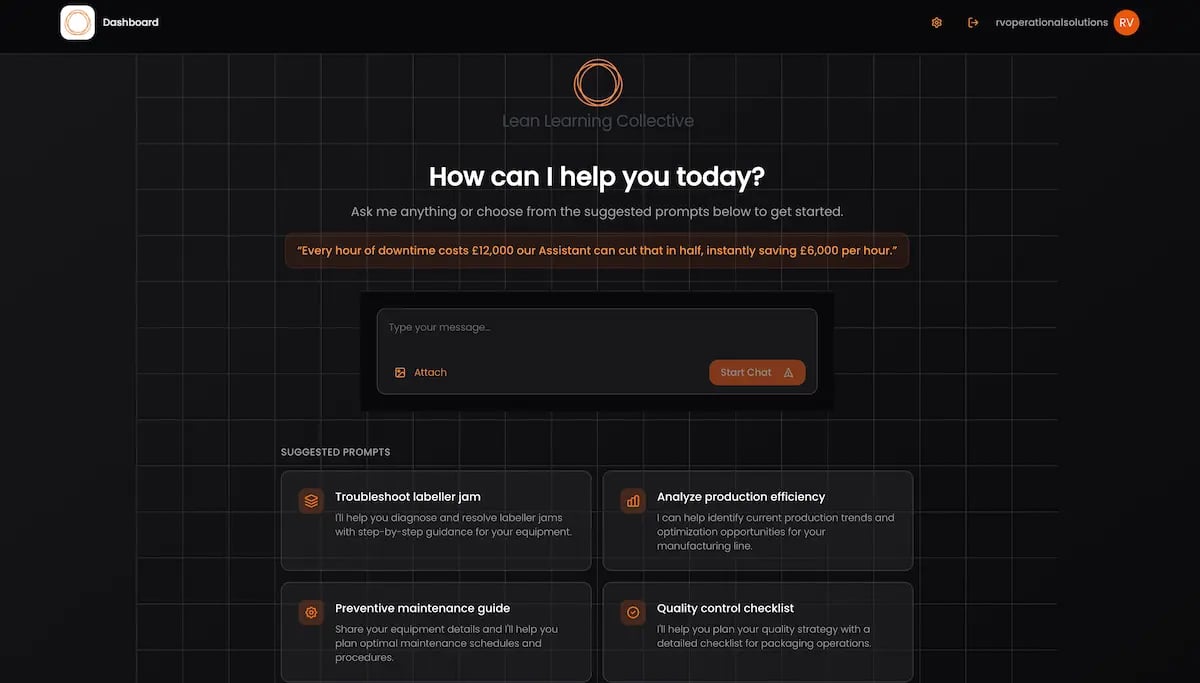
**AI-powered shift reports** close that gap. By combining **digital data capture**, **automation** (e.g., n8n), and AI/ML agents like[**Leana AI**,](https://www.leanlearningcollective.com/leana-ai-detective) manufacturers convert unstructured shift notes into **structured, shareable, and searchable insights**. The payoff: tighter inter‑departmental communication, faster escalations, and a culture of **continuous improvement** supported by hard data, not hearsay from the Lean Learning Collective.
## **What You’ll Learn in This Guide**
- **What AI-powered shift reports are** and why they’re now essential for **modern manufacturing**.
- The **hidden costs** of manual, paper-first handovers and why they fail in high‑velocity environments.
- How **automation + AI** turns raw notes into **actionable intelligence** for production, QA, maintenance, planning, and HR.
- A **step‑by‑step roadmap** to implement an AI-driven reporting system, from pilot to full rollout.
- Practical **KPIs and ROI levers** to quantify impact on downtime, scrap, and labor.
### **Why AI-Powered Shift Reports Are Essential in Modern Manufacturing From Data Exhaust to Strategic Advantage**
Every line, cell, and workcentre emits data. Historically, that data was “exhaust”,hard to collect, harder to analyse, and rarely available in time to act. **AI-powered shift reports** change that dynamic. They:
- **Standardise data capture** through guided forms, checklists, and structured fields.
- **Automate routing and enrichment** using **n8n** or similar low-code platforms.
- **Interpret and summarise** free text using **NLP** and **ML** (e.g., **Leana AI**).
- **Visualise and alert** through role-based dashboards, email/Teams/Slack notifications, and targeted digests.
The outcome is **real-time visibility** and **predictive capability** that manual processes simply can’t match.
### **Core Components of an AI-Powered Shift Reporting Stack**
**1) Data Capture Tools (e.g., Gemba Tracker)** Digitise observations, counts, faults, stoppages, and safety notes at the source. Use mobile and kiosk interfaces, barcode/QR scans, photo/video attachments, and guided prompts to lift data quality.
**2) Automation Platform (e.g., n8n)** Act as the connective tissue. Pull in entries from capture tools, MES, SCADA, ERP, and CMMS; perform data validation, timestamping, and transformation; then fan-out to AI, storage, and dashboards.
**3) AI/ML Agent (e.g., Leana AI)** Convert unstructured notes into structured records: categories, tags, severity, root-cause hints, and concise summaries. Detect anomalies, cluster similar incidents, and surface leading indicators.
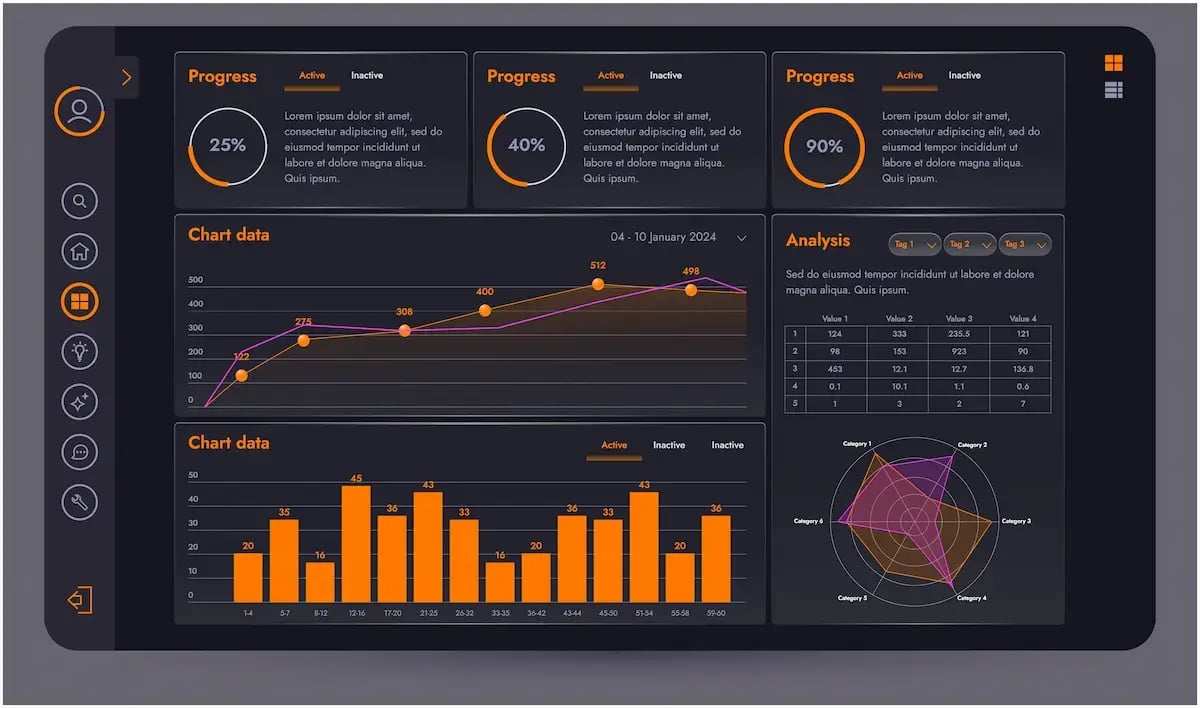
**4) Reporting & Visualisation** Role-based dashboards for Production, Quality, Maintenance, Planning, and HR. Drill-downs, trend lines, paretos, SPC signals, and auto‑generated shift summaries.
**5) Integrations** API-first connections with ERP/MES/CMMS/QMS/LMS to enrich context (e.g., work order, BOM, tooling, crew, batch, and maintenance history) and to trigger closed-loop actions (work orders, holds, concessions).
[](https://www.leanlearningcollective.com/hs/cta/wi/redirect?encryptedPayload=AVxigLKI6DiJOPmooimkV8eFTycOo%2B3Z4qknfA4PbUGOcZBY9RTunjPDb3Nace6h2DN%2FUc60oav%2BfoxEywra4IWaA4%2BASe2IXvgo%2F0biNQpQ9vFBi3efgnWeE9%2BdCnN5olnKmHQtsytKnm4xrUGYG1xTkN6pMKrZtoEgUZchXsvlpo6y0o9DwlVO%2Bf6gBFHljKUVmjtyfzdC&webInteractiveContentId=300102531288&portalId=146557415)
### **The Hidden Costs of Manual Shift Handovers**
Manual handovers feel familiar,but they’re **expensive**. They introduce **inconsistency**, **subjectivity**, and **delays** that compound into scrap, downtime, and overtime.
### **Where Manual Notes Fail**
- **Inconsistent language & detail**: “Machine slow” vs “Cycle time +18% on OP30, station 2” are worlds apart for diagnosis.
- **Data gaps**: Busy shifts mean incomplete logs. Critical context disappears.
- **Slow propagation**: Paper travels at human speed. By the time data reaches QA or Maintenance, the window to act has closed.
- **Low reusability**: Free text in notebooks resists trend analysis, SPC checks, or pareto aggregation.
### **Business Impacts You Can Measure**
- **Extended downtime** from slow escalation and unclear fault descriptions.
- **Higher scrap/rework** due to missed early signals and poor traceability.
- **Resource misallocation** as Maintenance rolls blind and QA hunts for clues.
- **Stalled CI** because the dataset isn’t analysis-ready, halting true **root cause analysis (RCA)**.
**Bottom line:** Manual reporting imposes a silent “tax” on throughput, quality, and morale.
## **How AI Transforms Daily Production Notes into Actionable Intelligence.**
### **The Flow: Capture → Orchestrate → Enrich → Analyse → Act**
1. **Capture**: Operators submit notes via **Gemba Tracker** with guided fields (asset, symptom, codes, photos, time lost).
2. **Orchestrate**: **n8n** validates, normalises, and enriches (e.g., attach WO/PO, crew, lot).
3. **Enrich**: Add telemetry from SCADA/MES and maintenance history from CMMS.
4. **Analyse**: **Leana AI** performs **NLP**, tagging (e.g., *electrical fault*, *material jam*, *quality deviation*), clusters similar incidents, and flags **anomalies**.
5. **Act**: Auto-generate **shift summaries**, push **alerts** to the right teams, create **work orders**, and update dashboards.
### **What the AI Actually Delivers.**
- **Consistent categorisation** for paretos and SPC.
- **Trend detection** across shifts/lines to reveal leading indicators.
- **Concise, audience-specific summaries** (e.g., “Maintenance view”, “QA view”).
- **Anomaly detection** to surface out-of-pattern events.
- **Searchable history** for rapid **RCA** and training.
### **Example Outputs. (Illustrative)**
- **Maintenance digest**: “3 repeat stoppages on Filler-2 linked to cap‑feed torque variance; suggest PM frequency increase and hopper alignment check.”
- **QA snapshot**: “Rise in seam failures on Line 4; correlated with new lot of adhesive. Containment in place; 2 pallets quarantined.”
- **Production summary**: “OEE 72.9% (A 90.1 / P 79.3 / Q 90.8). Primary losses: micro‑stoppages on OP20, changeover overrun (+22 min).”
### **Cross-Functional Impact: Better Communication, Faster Resolution.**
### **Unified Dashboards End Silos.**
- **Single source of truth** shared by Production, QA, Maintenance, Planning, and HR.
- **Tailored views**: OEE & losses for Production, defects for QA, MTBF/MTTR for Maintenance, skills/compliance for HR.
- **Proactive alerts** when limits are breached (e.g., SPC alarm, downtime threshold, scrap spike).
- **Historical context** baked in so teams can see pattern, not just point-in-time.
### **How It Speeds Problem Resolution.**
- **Immediate escalation** based on severity rules and keywords.
- **RCA accelerator**: pre-clustered incidents and linked telemetry reduce time-to-root-cause.
- **Closed-loop actions**: trigger CMMS work orders, QA holds, and deviation reports directly from the insight.
- **Faster feedback loops** into SOPs, training, and CI charters.
**Result:** Less finger‑pointing, more fact‑based collaboration—and a shorter path from signal to solution.
## **Measuring ROI: The Metrics That Matter Quantifiable Levers.**
- ## **Reduced manual effort**: Replace 30‑minute handwritten reports per shift with auto‑generated digests. Across 3 shifts × 3 roles, that’s **dozens of hours** per week back to value-add work.
- **Downtime cut 15–30%**: Early alerts and clearer fault detail reduce MTTR and prevent repeats.
- **Scrap down 5–10%**: Faster detection of quality drift and targeted containment.
- **Optimised maintenance**: Move from calendar to **condition‑based** tasks; MTBF improves, spares usage stabilises.
- **Audit readiness**: Consistent digital trail reduces audit prep time and compliance risk.
### **KPI Starter Set.**
- **OEE**, broken into **Availability / Performance / Quality** with loss paretos.
- **MTBF / MTTR** by asset and failure code.
- **First Pass Yield (FPY)** and **Cost of Poor Quality (COPQ)**.
- **Escalation lead time** (event → notification → acknowledgement → fix start).
- **Report completion rate** and **data quality score** (mandatory fields, photo attach rate, categorisation accuracy).
Track **before vs after** on a pilot line. Use that delta to build your business case for rollout.
## **Implementation Roadmap: From Pilot to Plant-Wide.**
### **Phase 1: Define & Design (Weeks 1–2)**
- **Clarify objectives**: e.g., reduce unplanned downtime 20%, improve FPY 8%, shrink escalation lead time 50%.
- **Map current workflows**: who records what, where it lives, and who needs it.
- **Choose scope**: one line/cell, one product family, or your highest-loss asset.
### **Phase 2: Build the Pilot (Weeks 2–6)**
- **Configure Gemba Tracker**: standard fields, dropdown codes, photo capture, required entries.
- **Set up n8n**: validation, enrichment, system integrations, notifications.
- **Integrate AI**: **Leana AI** for NLP tagging, clustering, and summaries.
- **Design dashboards**: role-based cards and threshold alerts.
### **Phase 3: Train & Tune (Weeks 6–10)**
- **Hands-on training** for operators, leads, engineers, and managers.
- **Feedback loops**: refine forms, categories, and alert rules.
- **Ground-truth checks**: verify AI suggestions and adjust models.
### **Phase 4: Prove Value (Weeks 10–14)**
- **Run A/B comparisons** vs. baseline on select KPIs (MTTR, FPY, scrap, OEE).
- **Capture quick wins** and publish internal case notes.
- **Refine changeover of ownership**: who acts on what alerts, within what SLA.
### **Phase 5: Scale & Sustain (Weeks 14+)**
- **Roll out** to more lines, shifts, or plants.
- **Institutionalise CI**: weekly reviews using the same dashboards.
- **Automate more**: auto‑create CMMS work orders, QA holds, and SPC investigations.
- **Governance**: data owner, model owner, change management cadence.
## **Tooling Deep Dive: What Each Piece Does Best.**
### **Gemba Tracker (Data Capture)**
- **Structured templates** for stoppages, safety, quality, and maintenance calls.
- **Mandatory fields** to ensure complete context (asset, fault code, duration, evidence).
- **Offline-capable** mobile entry with quick‑tap inputs to reduce friction.
- **Operator-friendly UX** that boosts adoption and data quality.
### **n8n (Orchestration)**
- **Low-code workflows** to transform and route data between systems.
- **Validation & business rules** (e.g., enforce durations, crew IDs, batch format).
- **Event-driven triggers** for alerts and downstream actions.
- **API-first** integrations with **ERP/MES/CMMS/QMS**.
### **Leana AI (Intelligence)**
- **NLP** to parse free text into **categories**, **tags**, **severity**, and **summaries**.
- **Clustering** to reveal repeat issues and hidden themes.
- **Anomaly detection** to highlight out-of-pattern events.
- **Audience-specific narratives** to reduce cognitive load.
## **Overcoming Common Challenges.**
### **Data Quality & Consistency**
- **Standardise inputs** with dropdowns, fault codes, and guided prompts.
- **Data validation** in **n8n** to reject incomplete or illogical entries.
- **Periodic audits**: sample entries weekly to score completeness and accuracy.
### **Integrations & Legacy Systems**
- Start **incremental**: connect the most impactful systems first.
- Prefer **APIs** over manual exports; cache where latency matters.
- Create a **canonical data model** (asset, event, timeline) and map everything to it.
### **Privacy, Security & Ethics**
- **Role-based access** and **least privilege** for sensitive data.
- **Encryption in transit and at rest**; robust logging and retention policies.
- **Explainable AI**: keep a trail of why the AI flagged, grouped, or escalated.
### **Change Management & Adoption**
- **Co-design with operators**; let them shape the form they’ll use daily.
- **Show quick wins** early (e.g., prevented downtime incident, scrap reduction).
- **Celebrate compliance**: recognise teams for high data quality and fast responses.
## **Practical Playbooks **
### **Daily Shift Summary (Auto-Generated)**
- **Top 3 incidents** (duration, asset, suspected cause)
- **OEE & loss pareto** (top two categories)
- **Quality signals** (defect rate vs limit, lots impacted)
- **Maintenance status** (open WOs, overdue PMs)
- **Safety & compliance** (observations, actions)
- **Planned actions** (owner, due time)
### **Escalation Rules (Examples)**
- **Critical downtime > 15 min** on any bottleneck asset → alert Maintenance Lead + Production Manager immediately.
- **Quality deviation beyond SPC limit** → auto‑create NCR; notify QA and Line Lead.
- **Repeat micro‑stoppage (≥5 in 60 min)** → alert CI Engineer with clustered context.
### **Tagging Taxonomy (Starter)**
- **Fault type**: electrical, mechanical, controls, tooling, material, methods, environment.
- **Impact**: downtime, rate loss, rework, scrap, safety, compliance.
- **Stage**: startup, run, changeover, shutdown.
- **Severity**: critical, major, minor, info.

## **FAQs**
**Q: Will this replace my operators’ judgment?**
**A:** No. AI-powered shift reports augment human expertise by removing grunt work and surfacing patterns. Humans still decide and act.
**Q: How fast can we see results?**
**A:** Most teams see quick wins during the pilot once alerts and dashboards go live, especially in escalation times, MTTR, and data completeness.
**Q: What about small plants without big IT teams?**
**A:** Tools like Gemba Tracker and n8n are lightweight and low‑code. You can start small and scale as value proves out.
**Q: Is our data secure?**
**A:** Yes, use role-based access, encryption, and clear retention policies. Keep personal data to a minimum and audit regularly.
**Q: How do we avoid “alert fatigue”?**
**A:** Start with few, meaningful rules; tune thresholds; and add context (asset criticality, shift, product) so alerts are actionable, not noisy.
## **Elevate Your Operations with AI-Powered Shift Reports**
Your plant is already generating the data you need to improve. Don’t let it languish in notebooks and inboxes. **AI-powered shift reports**, built on **Gemba Tracker** for capture, **n8n** for orchestration, and [Leana AI](https://www.leanlearningcollective.com/leana-ai-detective)for intelligence, turn everyday notes into the operating system of your factory.
**Next steps:**
1. **Pick a pilot line** with visible losses and a motivated team.
2. **Standardise the form** in **Gemba Tracker** and define your **tagging taxonomy**.
3. **Wire up n8n** to enrich and route data; turn on two or three **high‑value alerts**.
4. **Enable AI summaries** with **Leana AI**; publish a **daily digest**.
5. **Measure deltas** on downtime, scrap, and escalation time—then scale what works.
**Ready to see it in action?** Map your current handover flow, and we’ll draft a pilot configuration that delivers measurable value in weeks, not months.
[](https://www.leanlearningcollective.com/hs/cta/wi/redirect?encryptedPayload=AVxigLLR2dywXakWRHGGteJFjPP%2Bn8wE1eylYPdmJPgURB3sZLxe%2Bv2qp4XT5rXBdwfm2tj53NB4kHxXbWtV%2BMMWFkijrexZ18RGy8IGcj7JRmmQFVb9DmUP79yX5LeCgvysdhq2%2FLpvmcfTZWSKawxM3JA8TCH5JOSn%2FUQxs1Kk%2FZaynRz2l0zCzEf94plv8akftyRJvewi&webInteractiveContentId=300052607197&portalId=146557415)
Contact the [Lean Learning Collective.](https://www.leanlearningcollective.com/contact-us)

**[Graeme Hogg](https://www.leanlearningcollective.com/blog/author/graeme-hogg)**
Oct 30, 2025, 1:45:39 PM
An Operations Consultant and Coach, Graeme lives and breathes operational excellence. Unlike typical consultants, he is known for his "boots on the ground" approach, engaging directly with teams and situations to drive meaningful change.
### Ready to Transform Your Operations?
Have a question, project idea, or just want to say hello? Reach out to our team. We’d love to hear from you.

- [Case Studies](https://www.leanlearningcollective.com/case-studies)
- [About Us](https://www.leanlearningcollective.com/about-us)
- [Who We Help](https://www.leanlearningcollective.com/who-we-help)
- [Blog](https://www.leanlearningcollective.com/blog)
- [Leana AI-Detective](https://www.leanlearningcollective.com/leana-ai-detective)
- [Smart-Stop Productivity](https://www.leanlearningcollective.com/smartstop-productivity)
- [Smart-OTIF Delivery](https://www.leanlearningcollective.com/smartotif-delivery)
- [Custom Integrations](https://www.leanlearningcollective.com/custom-workflow-integrations)
- [Book a Demo](https://www.leanlearningcollective.com/book-a-demo)
- [Instant AI Opportunity Audit](https://www.leanlearningcollective.com/ai-audit)
© 2026 Lean Learning Collective Ltd. All Rights Reserved. [Privacy Policy](https://www.leanlearningcollective.com/privacy-policy) | [Terms & Conditions](https://www.leanlearningcollective.com/terms-conditions)
-
-
-
```json
{
"@context" : "https://schema.org",
"@type" : "BlogPosting",
"author" : {
"@type" : "Person",
"name" : "Graeme Hogg",
"url" : "https://www.leanlearningcollective.com/blog/author/graeme-hogg"
},
"dateModified" : "2025-11-14T08:42:36.361Z",
"datePublished" : "2025-10-30T13:45:39.000Z",
"headline" : "AI-Powered Shift Reports for Smarter Production Insights",
"image" : [ "https://www.leanlearningcollective.com/hubfs/Blog%20Image:%20Leana%20Header%20Page.webp" ],
"mainEntityOfPage" : {
"@id" : "https://www.leanlearningcollective.com/blog/ai-powered-shift-reports-for-smarter-production-insights",
"@type" : "WebPage"
},
"publisher" : {
"@type" : "Organization",
"logo" : {
"@type" : "ImageObject",
"url" : "https://www.leanlearningcollective.com/hubfs/LLC-Logo-main-line-white.png"
},
"name" : "Lean Learning Collective"
}
}
```